
Practice & costs
Calculating shoplifting losses: one can stolen, nine more to sell
One can missing from the shelf means more than a lost sale. A transparent price example shows why nine additional sales may be needed just to recover its purchase cost.

AI-generated illustrative image of a small shop.
One can is missing. At first, it looks like a small loss. For a small shop, however, that can represents money already spent on stock. Earning it back often takes more than one additional sale.
In our price example, nine more cans of Red Bull must be sold just to recover the purchase cost of one stolen can. The calculation shows why shoplifting puts pressure on profit, and why it helps to review unusual incidents directly while the team continues serving customers.
One can gone: how the nine-sales calculation works
For this example, we use two publicly available prices, checked on 7 October 2026:
- Purchase price: The Krause soft drinks price list, dated 25 August 2026, lists Red Bull Original in a 250 ml can at €1.189 per can excluding VAT when bought in a pack of 24. According to the Krause pricing terms, these prices apply to collection.
- Selling price: The BILLA online shop lists the 250 ml can at €1.59 including VAT, plus a €0.25 deposit. At 20% VAT, that gives a net selling price of €1.325, excluding the deposit.
We combine these figures for an illustrative retailer. They do not describe BILLA's purchasing terms or actual margin.
Subtract the net purchase price from the assumed net selling price:
€1.325 − €1.189 = €0.136 gross profit per can sold.
This gross profit is not net profit: the shop still has other costs to cover. Divide the purchase-cost loss on the stolen can by this amount:
€1.189 ÷ €0.136 = 8.74 — rounded up, nine additional sales.
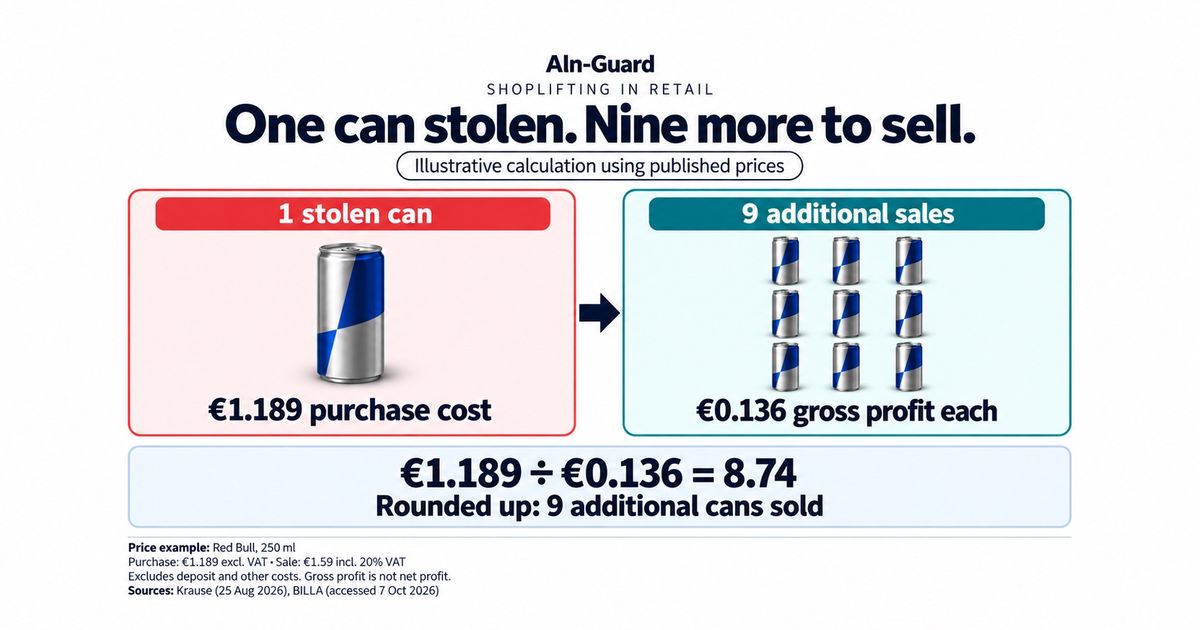
Open the full-size infographic
The example assumes a business entitled to recover input VAT and considers only the value of the goods, excluding the deposit. Delivery costs, payment fees, staff time and lost sales opportunities are not included. Additional costs can mean more sales are needed; different purchase or selling prices also change the result.
Why sales revenue does not fully recover the loss
When another can sells for €1.59, the full €1.59 is not available to make up for the theft. That can also had to be purchased, and the selling price includes VAT.
For your own calculation, what matters is the amount an additional sale contributes after the cost of the goods and other variable costs. This is called the contribution margin. The business's overall net profit margin is not automatically the right figure to use, because it also reflects fixed costs.
The loss also affects available funds: stock you have already paid for can no longer generate revenue. Reordering costs money, but it also creates new stock. Its full value must therefore not be added to the original stock loss a second time.
Small teams need a clear review process
Between the till, deliveries and customer questions, there is little time to watch CCTV continuously. Any additional security solution needs to fit into the shop's daily routine.
A simple process helps: one designated person receives alerts, with a colleague covering when needed. Both know how to review a clip and document a relevant incident. This makes responsibilities clear when the shop gets busy.
The shop layout matters too. Clear sightlines, organised shelves and attentive staff complement technical support. The German Police Crime Prevention programme recommends physical and organisational measures as part of protection against shoplifting.
How AIn-Guard highlights unusual moments
AIn-Guard analyses movement patterns in live video streams and sends detected unusual activity as short videos directly to authorised staff. The team can then review the relevant moment. An alert is a reason to check, not proof of theft. The decision stays with a person.
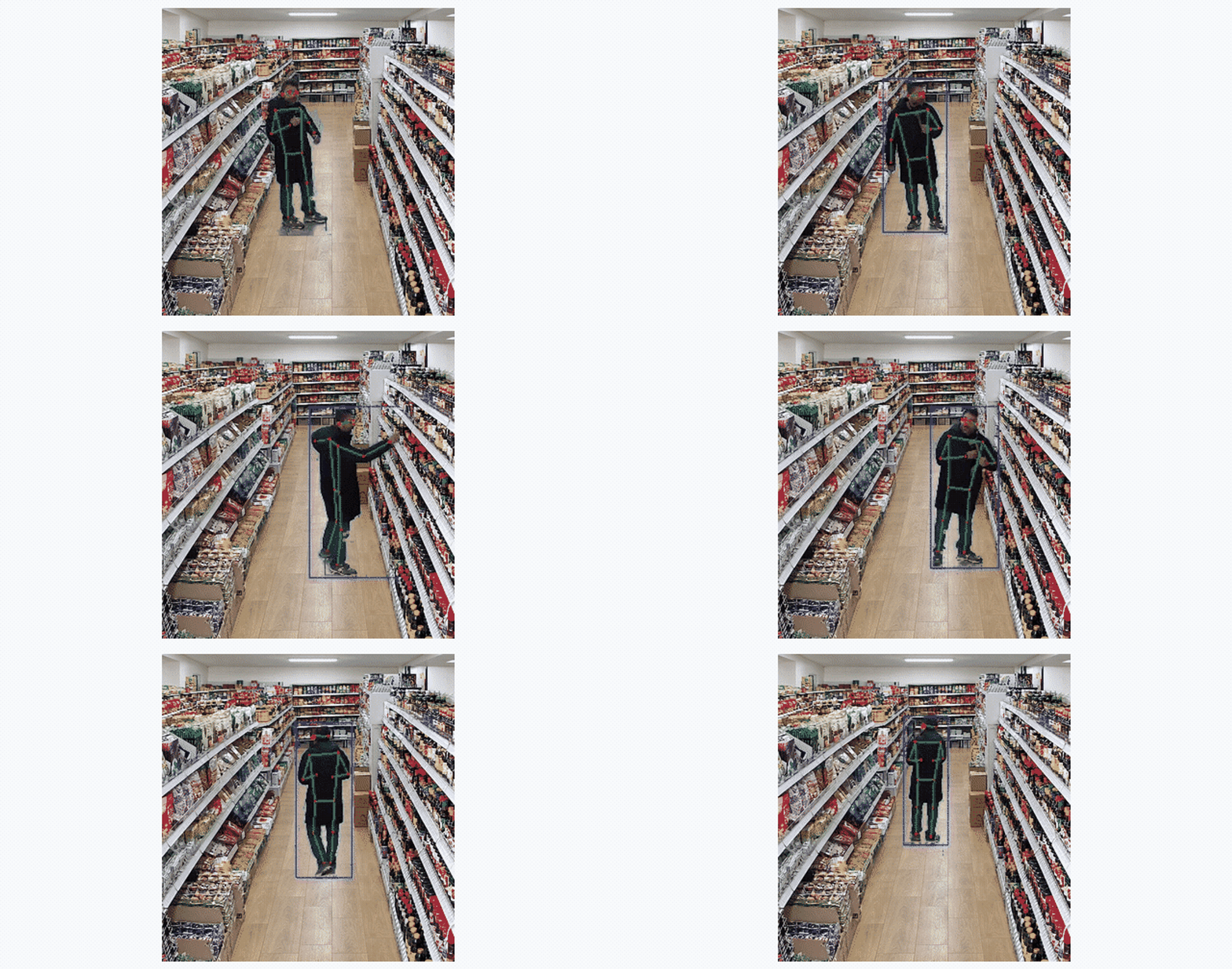
This saves the search for the right moment, but it does not remove every task: alerts still need to be reviewed, including those where the situation turns out to be unremarkable. Our article on the technology behind AIn-Guard explains how movement analysis leads to a video alert.
If a delivered clip is needed for further handling, it must be saved before the defined retention period expires. The supplied clip is then deleted automatically. The retention period and process must suit the purpose of the processing and be known to the responsible staff. Saved copies also need controlled access and limited retention.
Existing CCTV systems can be connected where camera access and the video stream are compatible. The specific setup is checked in advance. AIn-Guard is currently being tested at selected locations in Austria and Germany. Read more about the process in Prevent shoplifting with AI.
What makes financial sense for your shop
The Red Bull calculation illustrates the relationship between stock loss and margin. It does not replace an assessment of whether to buy a security system. Your purchase prices, losses and the benefits you can actually achieve are what matter.
Compare a quote with the additional stock losses that could be prevented under your conditions. Include setup, ongoing fees, any hardware and the time spent reviewing alerts. AIn-Guard provides quotes tailored to each shop.
Frequently asked questions
Does every stolen can of Red Bull require nine additional sales?
No. Nine is the result of the stated prices and the simplified calculation excluding the deposit and other costs. Different terms produce a different result.
How can I calculate the sales needed for my own products?
Divide the purchase-cost value of the lost stock by the contribution margin of an additional sale. Use comparable figures excluding VAT and round the number of units needed up.
Does a video alert prevent every theft?
No. It can draw attention to a situation worth reviewing. Whether a loss can be prevented also depends on detection, timing and an appropriate response.
Find out whether AIn-Guard suits your shop. We will review your camera system and alert-review process with you, then prepare a quote for your location. Check camera compatibility and request a demo.

